Hurry Up and Wait
How the arts teach patience

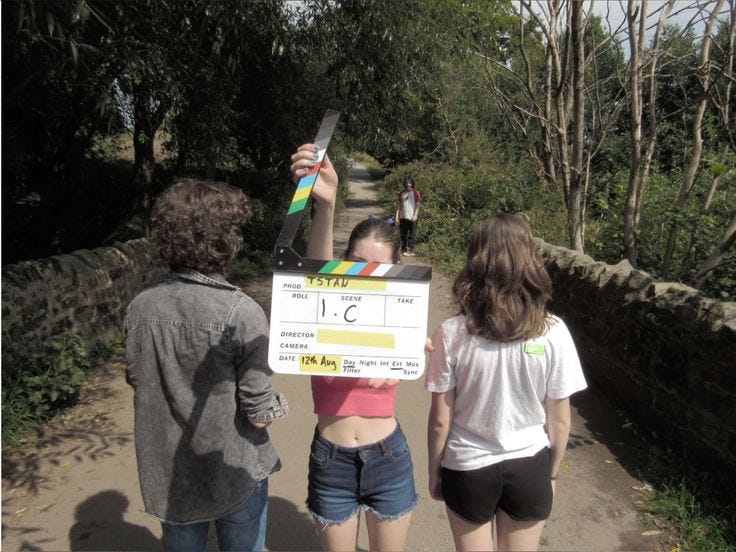
For the longest time, I’ve wanted to be an actor, which many of you know if you’ve been here before. I dream of acting my little heart away for hours on end until I get a few hours of shut-eye before doing it all again the next day.
And, this past year, I would finally proclaim myself an actor—something I’ve questioned for a while: when does one truly become one rather than self-proclaim? But, I’ve had serious jobs come from it this year—commercials, feature films, and short films, so I think it’s time to make the declaration (which is, honestly, something I could make a whole other blog post about).
And in becoming an actor, I’ve learned the significance of the phrase “hurry up and wait.” For those unfamiliar with film, there is a lot of waiting—setting up for the next scene, moving cameras, and placing lights in the correct location. You wait all day to perform your small scene in as few as just two takes.
This leaves a lot of time for contemplation: how will I deliver my line? Will I emphasize this or that word? Where should I put my hands as I say this? These lingering questions can make patience incredibly difficult. You want to bite the bullet and conquer the beast—the scene—but are often left in a small green room to overthink everything. This also applies to so many other factors in the acting world—hair, makeup, wardrobe, and the audition process, too.
But with this hustle-and-wait process, it forces you to grow a sense of patience that you may not have had before. You don’t run and ask if your scene is next or email casting directors over and over if you got the part, and if you do do this, you’re just getting in one’s own way, hurting your chances of success.
Additionally, the long waiting process helps you further develop stress-reducing techniques. Rather than lying upside down on my bed, staring at the ceiling as the minutes go by, I spend my time doing things that further my career or simply spark joy.
I record self-tapes for fun, read books about audition techniques, and watch movies, studying the way actors deliver the lines and their expressions. And when those things don’t support my mental health, I go on walks, read fiction books, and watch movies just to watch movies. Sure, I wasn’t always this way, and I still cross my fingers that I booked a role while I’m waiting for a response, but as time has gone on, I’ve felt a weight lift off my chest. I’ve embraced being patient and fallen back on things I’ve always loved and found comfort in, and that’s such an important part of being an actor, or artist, rather.
In the wait time between gigs and the decision-making process, it’s crucial to fall back into these loves and hobbies because these are the things that spark our inspiration. We don’t learn and grow as artists by sinking deeper into our own worrying minds. We learn by doing.
I learn by reading, by going out into my community and acting as an anthropologist, watching individuals naturally interact, and through watching movies with actors of more experience than myself.
Any art is an act of patience—rehearsing a play, watching paint dry, and choreographing a dance—and the time and thoughtfulness is what draws me to the craft, eventually making something so great.
Celia <3